
Walker Bay WO Springfontein Ridge: Springfontein

The story of Springfontein (“Jumping Spring”) reads much like something out of a novel. Dr Johst Weber, a former mining engineer in the Ruhr Valley and a Bordeaux fanatic, went to South Africa in search of a new venture and a wine estate. Rumours were circulating about a farm that might be for sale outside Stanford – not a well-known wine growing area – close to the estates in Hemel-en-Aarde that had already begun to make a name for themselves. Turning up at the farm, Johst found a couple of cows, a few goats and a solitary old man. More importantly however, there was a healthy spring, a limestone ridge and lots of potential for viticulture.
Vineyards
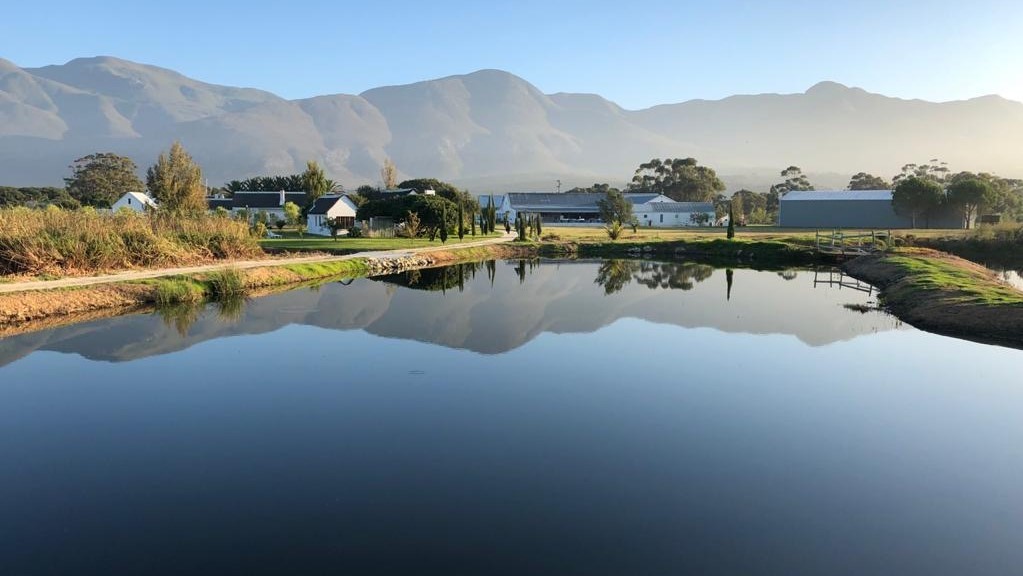
The first vines were planted in 1998, two years after he had first set foot on the land and four years after the end of Apartheid. Originally several different grape varieties were planted but the focus of the estate today has shifted towards the signature South African varieties of Chenin Blanc and Pinotage and the little-known Chenel, a cross between Chenin Blanc and Trebbiano Toscano. The vineyards are organically certified and are planted on ancient limestone soils, benefitting from cooling Atlantic breezes tempered by the Kleinrivier estuary, protected by the mountain range behind. The rest of the farm is given over to the famous fynbos of the Cape affording plenty of foraging opportunities for their fabulous Wortelgat restaurant, and some livestock still roams the holdings. Johst is joined in his venture by his wife and head of viticulture, Jeanne Vito, who was born in Chablis and grew up in the world of wine; her international experience and outlook bring great creativity to the vineyards and her passion for Chenel is infectious! Over the years, Johst and his team have worked to emphasise the importance of their unique terroir, coming to understand the cool limestone soils and their unique weather patterns; their hard work has paid off and they have been granted an entirely new Wine of Origin designation: Springfontein Rim. [Read an article in Forbes about Springfontein and Jeanne’s philosophy here.]
Vinification and Wines
The grapes are picked by hand in several passes to ensure that they are harvested only when completely ripe, after which they are chilled overnight to 5C before manual sorting the next day. As the fruit warms up, fermentation begins slowly, giving extended skin contact for their red wines, introducing more intense and complex aromas. They prefer to use smaller fermentation vessels – open barrels, small stainless steel tanks or even egg-shaped PUR tanks – allowing them to choose the best partner for each plot and grape variety, permitting more or less oxygen or wood in the blend. The Springfonteiners do not acidify or add tannins to their wines, nor do they filter them, in order to reflect their unique terroir; sulphur levels are kept as low as possible and always well below permitted limits.
Springfontein was the first South African winery to feature in our Private Cellar Selection, when both companies were freshly minted, and we have watched their evolution closely from their delicious first bottles to the award winning, high profile wines they are making today. It is definitely worth a visit if you ever find yourself in the Walker Bay area; they have three holiday cottages to rent too. To find out more about what it means to be organic, have a read of their blog here.
Find the Springfontein wines on our list and here on our website and have a look at Springfontein's website here: http://www.springfontein.co.za/
Click here for current availability or call us on 01353 721 999. For marketing queries, please contact Laura Taylor at laura@privatecellar.co.uk
